
person_outline

John is a freelance journalist and also currently contributes to a number of publications, including: Irish Independent, Sunday Times, Irish Times, Sunday Business Post, You and Your Money, Businessplus magazine and Technology Ireland magazine
Website URL: http://www.johncradden.ie/
Thursday, 09 April 2026 10:38
Mass appeal
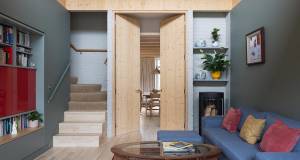
An architect’s four-year quest to build his family home on a Dublin laneway demonstrates how mass timber can maximize space and character in the tightest urban sites – with award-winning results, and fascinating performance insights.
Additional reporting by Jeff Colley
Published in
Feature
Tagged under
Wednesday, 07 January 2026 15:43
History repeating

Through passion, patience, and architectural expertise, a 16th century Carmel-ite friar’s cottage in Kinsale, owned by Passive House Plus columnist Dr Marc Ó Riain, has achieved what many thought impossible— an A1 energy rating for a Tudor-era building. But not without challenges.
Tuesday, 17 June 2025 11:02
Storm breaker
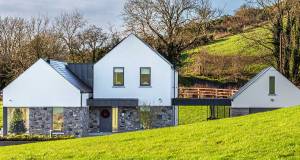
Five years ago, a fabric first trailblazer took a dose of his own medicine – and delivered a family home that combines climate action, comfort, cost-effectiveness and resilience in the face of a record-breaking storm.
Monday, 10 March 2025 16:07
Big picture - Passive towers protect vulnerable Bronx seniors
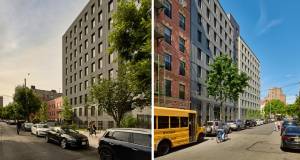
How do you serve the needs of senior citizens who have fallen on hard times in the Big
Apple? In Betances Residence, CookFox Architects have cooked up an extraordinary
response, integrating the protective benefits of passive house with beautifully considered,
user-tailored design.
Published in
Big picture
Wednesday, 15 May 2024 09:43
Banking on sustainability
Last year Irish banking behemoth AIB launched discounted development finance for homes certified to the Irish Green Building Council’s rating system, the Home Performance Index. But what was behind the move, how is it being received and does this indicate the finance industry is getting serious about green homes?
Additional words by Jeff Colley
Published in
Feature
Tagged under
Wednesday, 11 October 2023 14:34
Visionary vernacular
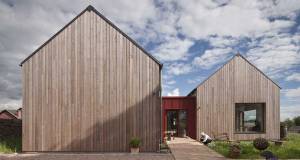
Can a low energy building be truly sustainable if it doesn’t fully consider its occupants needs? The latest offering from one of Scotland’s leading green designers uses passive house knowhow to signal the way to pragmatic, modest, occupant-centric architecture.
Thursday, 18 May 2023 15:37
Northern comfort
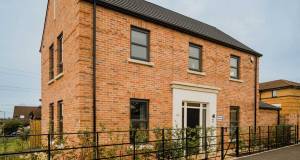
In trickier housing markets, the instincts of house builders have often tended towards building to the worst legal standards required – or worse. One award-winning new project in Belfast’s suburbs is showing that it doesn’t have to be this way – and that developers can thrive by pitching homes designed to ensure comfort and low bills at increasingly energy-conscious consumers.
Published in
New build
Tagged under
Wednesday, 25 January 2023 13:06
Block buster
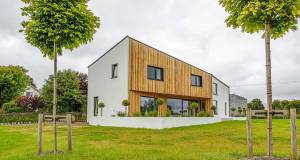
With emphasis in sustainable building shifting towards reducing embodied carbon, an obvious question comes into focus: is this an existential threat to the concrete industry? One passive house in Claregalway shows that – with a little help from Passive House Plus – concrete product manufacturers can make meaningful moves in the right direction.
Published in
New build
Tagged under
Monday, 05 September 2022 14:13
Mass timber masterwork
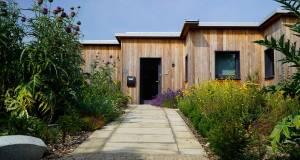
This home on the edge of the Cotswolds, built with cross-laminated timber, now holds the distinction of being the UK’s most airtight home, with the client even doing a significant chunk of the airtightness taping himself. What’s more, it demonstrates how passive homes that generate their own renewable power may escape the worst of the energy price crisis.
Published in
New build
Tagged under
Tuesday, 21 June 2022 14:19
Form and function
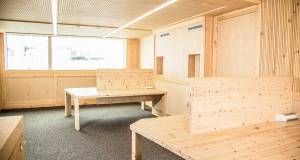
Run-down terraces are an all-too-common sight in towns and villages across Ireland, but an ambitious deep retrofit project in Tralee provides an inspiring blueprint for regeneration, taking a cold 19th century terraced office and turning it into a beautifully designed space with tiny energy bills, fit for the 21st century.
Page 1 of 6