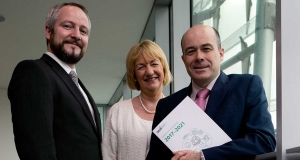
Government announces suite of retrofit grants
Move comes as failure to tackle carbon emissions sharply criticised

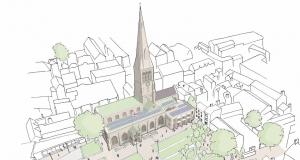
Architecture practice vHH has announce that it is planning to adopt the passive house standard on a three-storey extension to the Grade 11 listed Leicester Cathedral, which is due to start on site in July 2019.

On 13 June, in an address about retrofit policy to the joint conference of the Sustainable Traditional Buildings Alliance and the Society for the Protection of Ancient Buildings, I suggested that the UK retrofit industry is dangerously incompetent, and that is why we need to implement the Each Home Counts industry review. Little did I know that in less than twenty-four hours those words would come back to haunt me in the most horrific way, writes Dr Peter Rickaby.
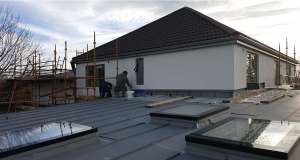
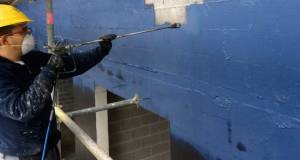
SEAI will host Ireland’s first ever deep retrofit conference at the Aviva Stadium in Dublin on 21 June.
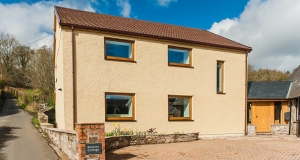
When it came to upgrading an old stone-walled building to the Enerphit standard — with all the inherent challenges such an upgrade poses for energy, airtightness and moisture — who better to have as your client and defacto site manager than a professor of physics?
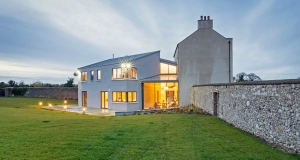
Homeowners Anne and Patrick Jordan’s ambitious upgrade and extension project in County Kildare took the shell of an 18th century farmhouse and transformed it into an elegant family home with a striking-yet-sensitive modern extension — all while embracing a healthy and fabric-first approach to retrofit combined with clever heating system design that has brought them from a G to an A3 rating.
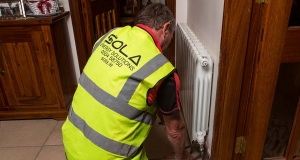
The SuperHomes Ireland retrofit scheme is open for applications for 2017. The scheme is designed to help homeowners retrofit their properties to an A3 BER standard.
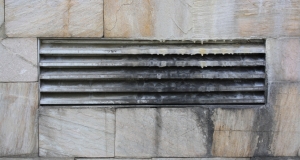
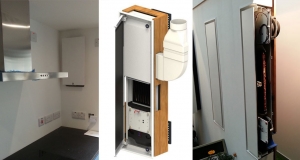
Leading low energy ventilation supplier Sustainable Homes Scotland has advised anyone carrying out a deep retrofit — or building a small low energy dwelling — to consider the benefits of a new generation of decentralised mechanical ventilation with heat recovery (MVHR) systems.
For a while now, schemes that aim to encourage the mass uptake of home energy upgrades — essential for cutting carbon emissions from our building stock — have tended to fall into two camps: those that focus on shallow measures like cavity wall insulation and new boilers, and deep retrofit like the Passive House Institute’s Enerphit standard. A new Irish retrofit scheme aims to point the way forward by bridging the gap between these two extremes.
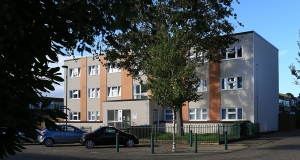
An exciting and innovative new deep retrofit project in Solihull has drastically cut the energy consumption of a small block of flats by smoothly and efficiently wrapping the entire structure in both insulation and ventilation ducting, delivering huge energy savings and minimal disturbance to the residents.
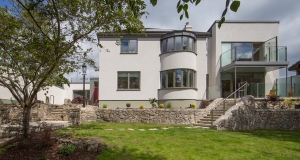
At first glance, this sprawling house in Blackrock would appear to be a nightmare candidate for a deep energy upgrade — large and sprawling, and with a mix of structures built at different times and with different materials. But guided by the passive house standard, the team behind it managed to turn a G-rated energy guzzler into a healthy and very-low energy family home – complete with an A rating.
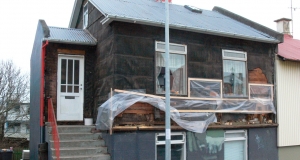
We all do, argues Dr Peter Rickaby, but the goal of mass retrofitting our energy inefficient building stock is hampered by the fact that when it comes to most retrofits, we simply don’t know what we’re trying to achieve.

The AECB (Association for Environment Conscious Building) has invested over five years of extensive research to put together a unique online advanced retrofit training course, which brings together a wealth of knowledge on low energy retrofit and methodology.

This new award-winning two-building extension to a primary school in the south of Wales delivers healthy, ultra low energy school buildings – one of which is passive house certified – while pushing the boundaries of timber engineering.
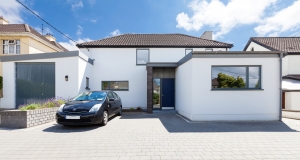
The deep retrofit of this two-storey 1950s house in Cork City transformed a draughty, poorly-insulated dwelling into a comfortable, low-energy home for one family – coming close to the Enerphit standard in the process.
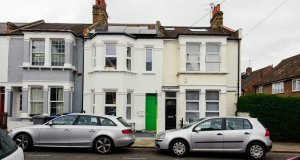
Upgrading a historic home to the passive house standard typically means leaving the façade untouched to preserve the building’s historic appearance, but the team behind this fully passive retrofit in Kensal Green took a totally different approach.
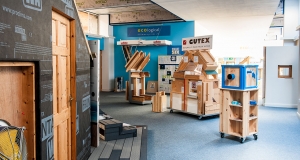
Ecological Building Systems has updated its Irish training programme for the autumn and winter season. Along with its award winning airtightness installer training, the company will launch a new course titled Low Energy Retrofits. To coincide with this Ecological will be also hold a Retrofit Insulation Masterclass on the 25 and 27 October.
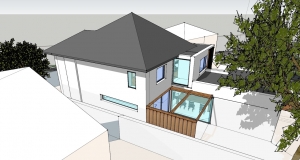
As part of the Passive House Association of Ireland southern region programme of CPD in passive house building knowledge, members have kindly agreed to open their passive building projects for site visits as a learning resource for builders, architects, students, systems installers and potential clients.

SuperHomes, a groundbreaking project designed to help homeowners to upgrade their homes to an A3 BER is open for applications.
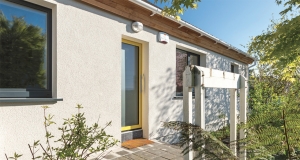
This pioneering deep energy upgrade of a 1960s home in Wicklow will take place in phases over at least five years, with the aim of making it more affordable to go passive by renovating on a step-by-step basis.
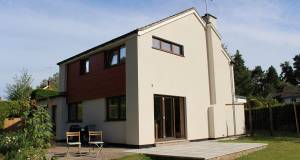
A deep retrofit of this 1960s block-built home turned it into a modern ultra low-energy home that emphasises wood, light and natural materials.
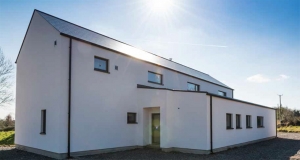
The abandoned husk of a 1960s school building sounds a very long way from a comfortable, ultra low energy family home. Thanks to a remarkable upgrade effort – influenced by reading Passive House Plus – one Fermanagh family are reaping the rewards of one such transformation.
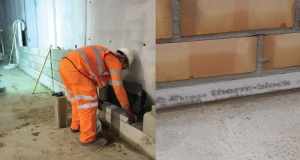
The refurbishment of a landmark listed property on London’s Leicester Square has seen Marmox Thermoblocks specified in very large quantities for an unusual application. Number 48 Leicester Square is being completely redeveloped behind the retained 1920s stone facade, with Make Architects leading the design team on behalf of client, Linseed Assets, while Pacific Construction is the main contractor.
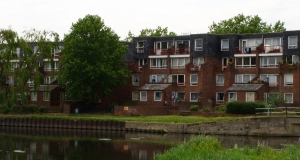
Roughly 50,000 excess winter deaths occur annually between the UK and Ireland, with fuel poverty a primary cause. Yet although concerted social housing retrofit efforts could help tackle climate change while preventing thousands of senseless deaths of vulnerable people, flawed financial modelling is letting us down, argues Peter Rickaby.
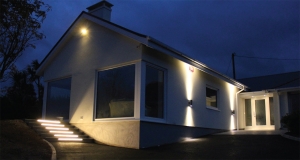
There was a time when governments thought that simply offering grants for cavity wall insulation and heating system upgrades would be enough to stimulate mass upgrade of our building stock. But ‘shallow’ measures such as these may not be sufficient to drastically cut carbon emissions and make a real difference to occupant comfort and health, and convincing homeowners to upgrade their homes to a much higher standard will require a clever mix of psychology and smart financing
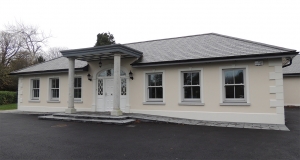
Builder Conor Walsh undertook an ambitious partial rebuild, partial retrofit to this 1960s bungalow, delivering deep energy savings and turning it into a modern family home
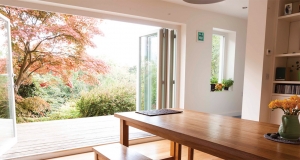
This unique energy retrofit in Bristol walked a fine line between ambition and pragmatism to deliver a healthy, comfortable and ultra-low energy home
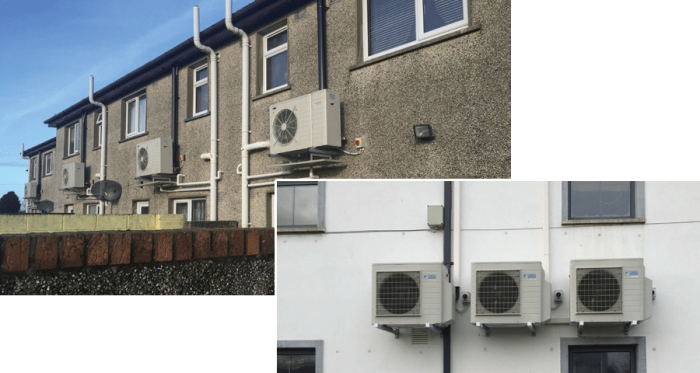
Heat pumps from leading manufacturer Daikin have recently been installed in social housing retrofit projects across the country, helping to cut bills and improve comfort for occupants.