Coillte Teoranta

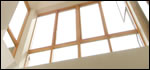
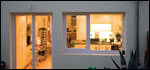
The building is the first all timber office complex in Ireland. It covers almost 2,300m2 of floor space and provides accommodation for almost 100 staff working in a wide range of forestry related disciplines.
Welcome to the archive of Construct Ireland, the award-winning Irish green building magazine which spawned Passive House Plus.
The feature articles in these archives span from 2003 to 2011, including case studies on hundreds of Irish sustainable buildings and dozens of investigative pieces on everything from green design and building methods, to the economic arguments for low energy construction.
While these articles appeared in an Irish publication, the vast majority of the content is relevant to our new audience in the UK and further afield. That said, readers from some regions should take care when reading some of the design advice - lots of south facing glazing in New Zealand may not be the wisest choice, for instance.
Dip in, and enjoy!

The building is the first all timber office complex in Ireland. It covers almost 2,300m2 of floor space and provides accommodation for almost 100 staff working in a wide range of forestry related disciplines.

The announcement in 2007 of the introduction of Smart electricity metering led to widespread hope that Ireland could set a global example by empowering consumers to cut electricity use and generate their own renewable electricity. John Hearne investigates current progress on the initiative, and discovers signs that Ireland’s approach to smart metering could represent a missed opportunity.

Sustainable Urban Drainage System by Padraig Doyle, Brian Hennelly and Don McEntee.

Nottingham passive house enters Solar Decathlon

A new house in west Cork offers a green vision for the future of Irish home building: not only is it A-rated, airtight and highly energy efficient, it’s built with ecological materials that are manufactured in Ireland too.
In light of Ireland’s poor performance in the recent European Environment Agency Report on drinking water quality, the issue of Ireland’s wastewater treatment from one off houses is poised to stay in the spotlight. Construct Ireland’s Pat Kennedy, environmental engineer, investigates.
The winner of the sustainability award at the 2011 Irish Architecture awards, Roebuck Castle student residence at UCD’s Belfield campus is also the biggest certified passive house project built to date in Ireland and the UK. Tony Rigg of Kavanagh Tuite Architects explains how such a significant building achieved passive results.

Innovative low energy construction is rarely recognised on a European scale. The Isover Energy Efficiency Awards are one exception — here are nominations from across the continent that were celebrated at the European awards ceremony in Barcelona on 2 June

Public private partnership schemes have come to dominate many aspects of Irish infrastructural development, from toll roads to urban regeneration schemes. Jason Walsh asks if they amount to privatisation by stealth and whether they come at too high a social and environmental cost.
A sustainable building must address more than energy, carbon or materials, argues Irish born architect Stephen Roe of up-and-coming London architects Roewu – it must respond to its environment. Not only does Roe’s design for the All Weather House achieve that, it boasts green materials, renewable heating and generous insulation too.