
- Big picture
- Posted
One family's response to a bushfire
Big Picture - Forrest Passive House in Spotswood achieves certification while maintaining contemporary family functionality through thoughtful material choices and spatial planning.
Even by Australian standards, the Black Summer bushfires of 2019-20 were devastating. Some twenty-four million hectares of land burned – killing an estimated one billion animals and displacing two billion more. Thirty-three people perished in the fires, with bushfire smoke causing the deaths of 417 more.
Before the fires, Melbourne couple Erin and Martin had been planning a substantial renovation and extension to their period cottage in Wurundjeri Country in Melbourne's Inner West, working with architects Altereco Design. When the bushfire smoke rolled in, an air quality monitor in the home showed spikes in particulate matter (PM) readings. With respiratory issues in their family, the failure of their period home to protect air quality in the home prompted a rethink.
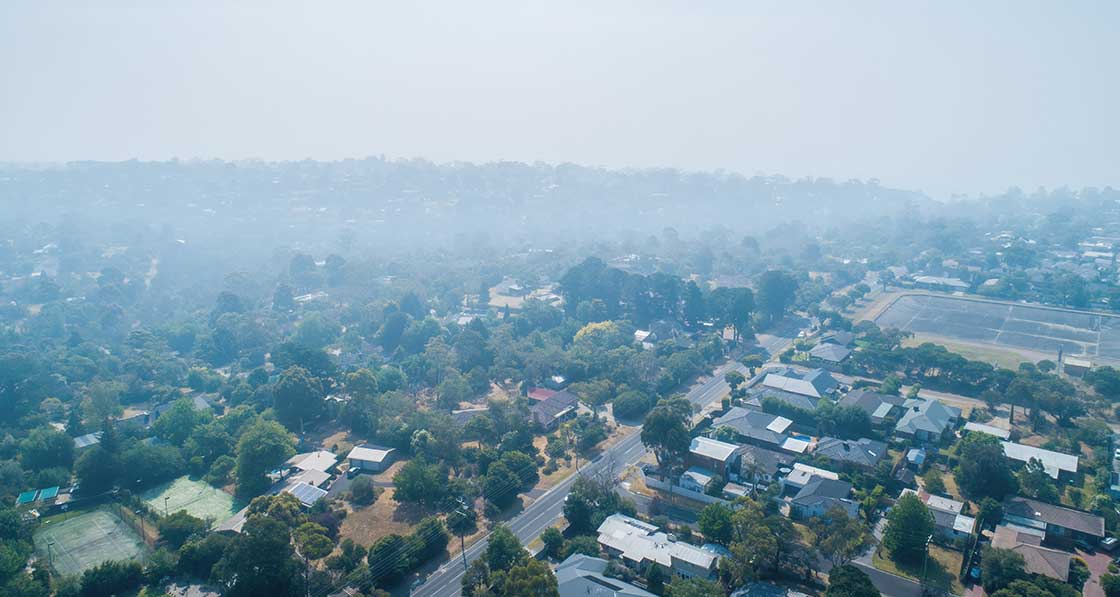
Bushfire smoke from the Black Summer forest fires descending on the suburbs in Melbourne. Photo: Tsvibrav
"When that bushfire smoke came through the city, it was shocking to see just how porous our old weatherboard house was," Erin told Sanctuary magazine. Weatherboard-clad it may have been, but the house was doing little to protect the family from the weather, with Erin describing the home as "freezing when it needed to be warm and boiling hot when it needed to be cool."
With respiratory sensitivities in the family and the Inner West's ongoing air quality challenges – from industrial zones and the busy West Gate Freeway to lingering memories of toxic factory fires – a renovation wouldn't suffice. The couple changed tack to designing a new dwelling.
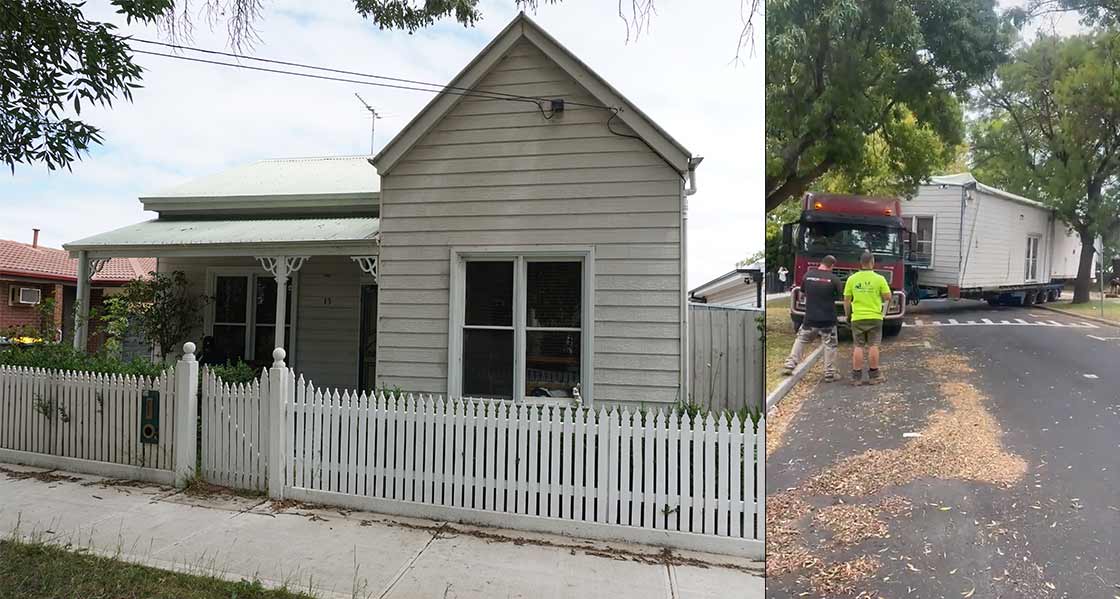
(l-r) The existing weatherboard house on the site, which dated from 1900; the house was lifted and moved by truck to the city of Ballarat.
This article was originally published in issue 51 of Passive House Plus magazine. Want immediate access to all back issues and exclusive extra content? Click here to subscribe for as little as €20, or click here to receive the next issue free of charge
While opting for new build over renovation can effectively waste the resources and embodied carbon stored in the original structure, in this case something remarkably different happened: rather than demolish the existing cottage, the lightweight house was carefully lifted up whole and relocated 130 km inland to the city of Ballarat, giving the weatherboard home a second life.
Working within a budget and with an open-minded approach to problem-solving, the couple collaborated with certified passive house builder Carland Constructions and certifier Detail Green. Designing the replacement didn’t cause long delays, as Altereco had something in their back pocket: a ready-made home using the Possum model in their AlterecO2 pre-designed house series, which is based on passive house principles.
The result? A new certified passive house at Forrest in Melbourne's Inner West, which effortlessly fuses avant garde energy performance and comfort while filtering particulates from the fresh air, all wrapped up within a sleek contemporary residential design.
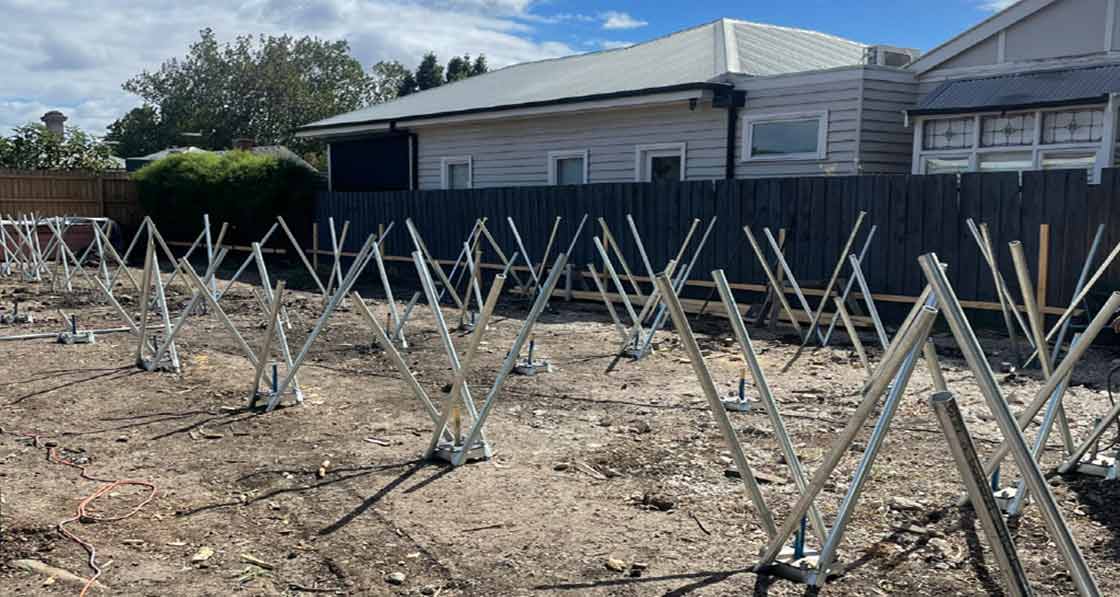
The new home’s concrete-free Allfoot steel footings
Built by Carland Constructions, the project achieved passive house classic certification through a combination of timber frame technology and careful attention to building envelope quality in a house that, at 167 m2, is comparatively modestly sized when set against the Australian average of 240.8 m2.
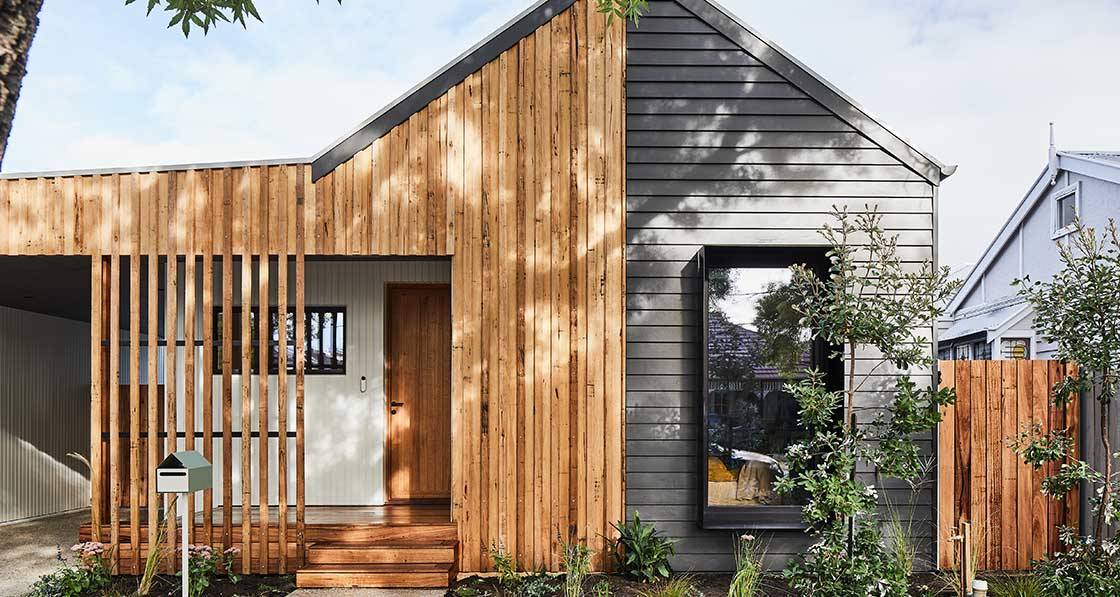
From the street, the two-pavilion composition breaks down what could have been an imposing mass into something more neighbourly.
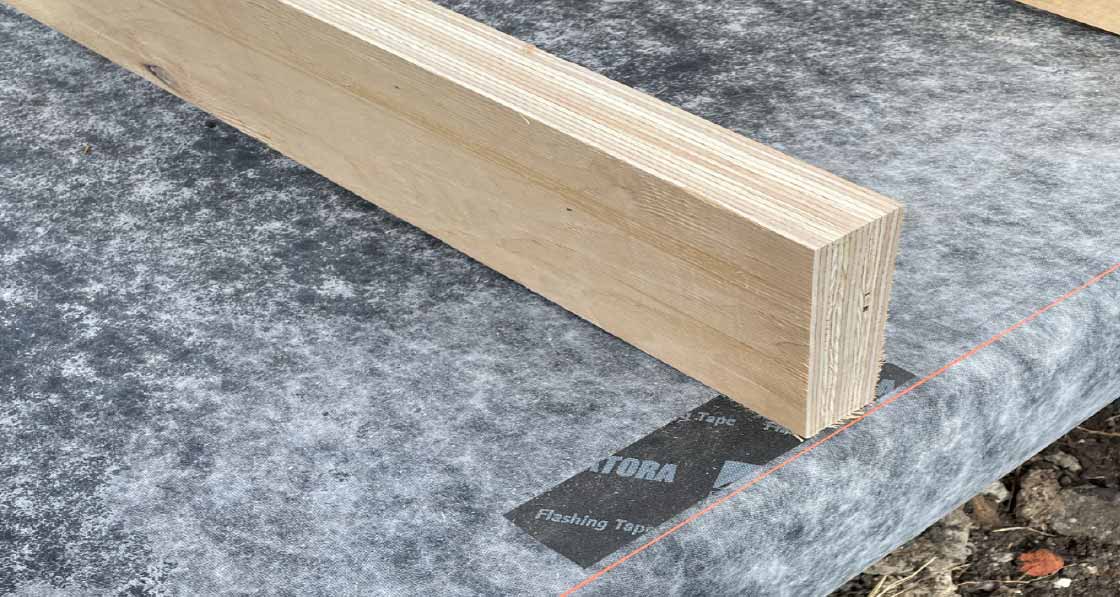
A modern take on suspended timber floor
A timber-clad living wing contrasts against the dark horizontal weatherboarding of the bedroom block, while vertical silver top ash timber screening filters light to the covered outdoor areas beyond. Located in Spotswood, an established suburb undergoing gradual densification, this arrangement allows the building to sit comfortably within the suburban streetscape.
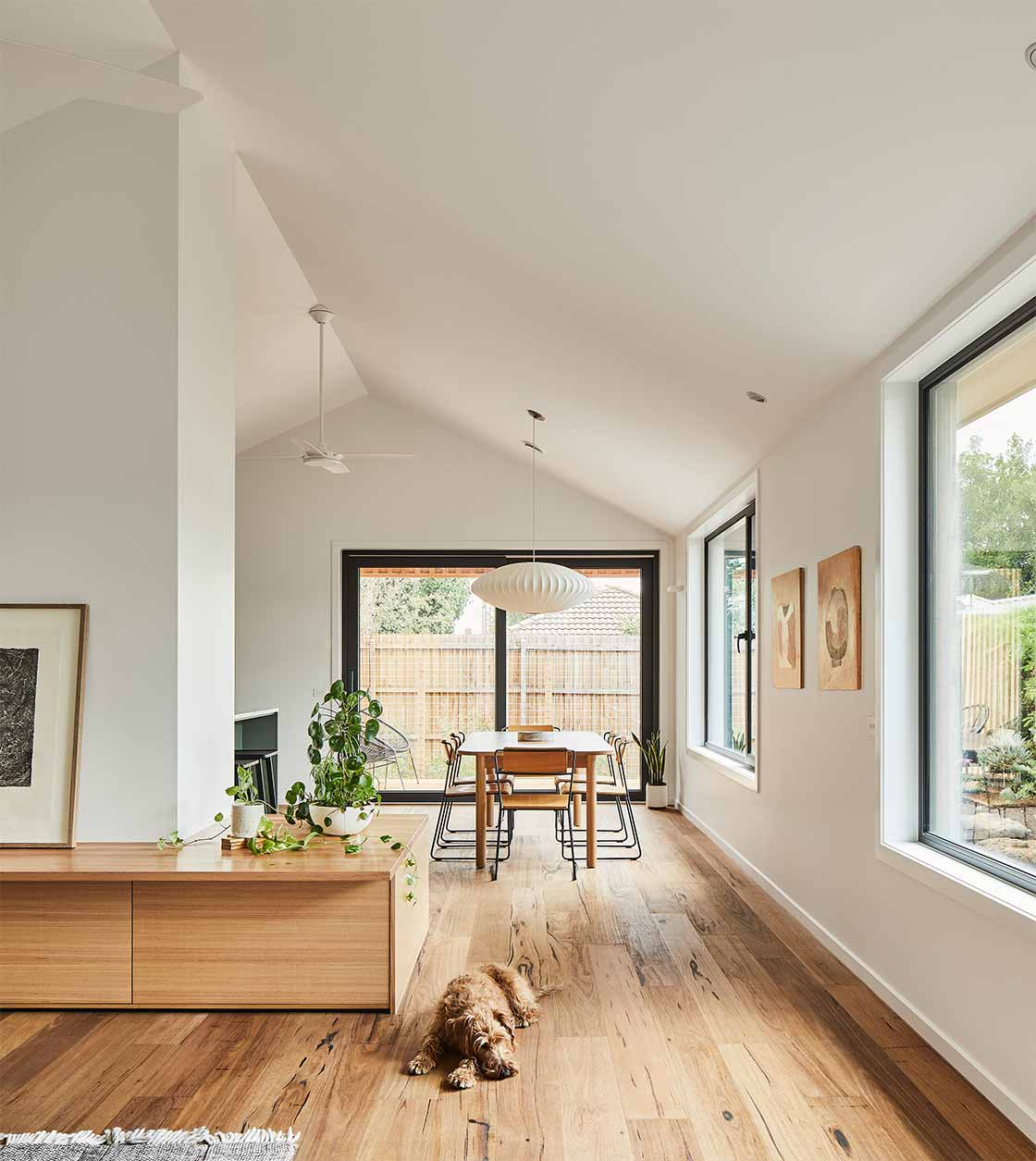
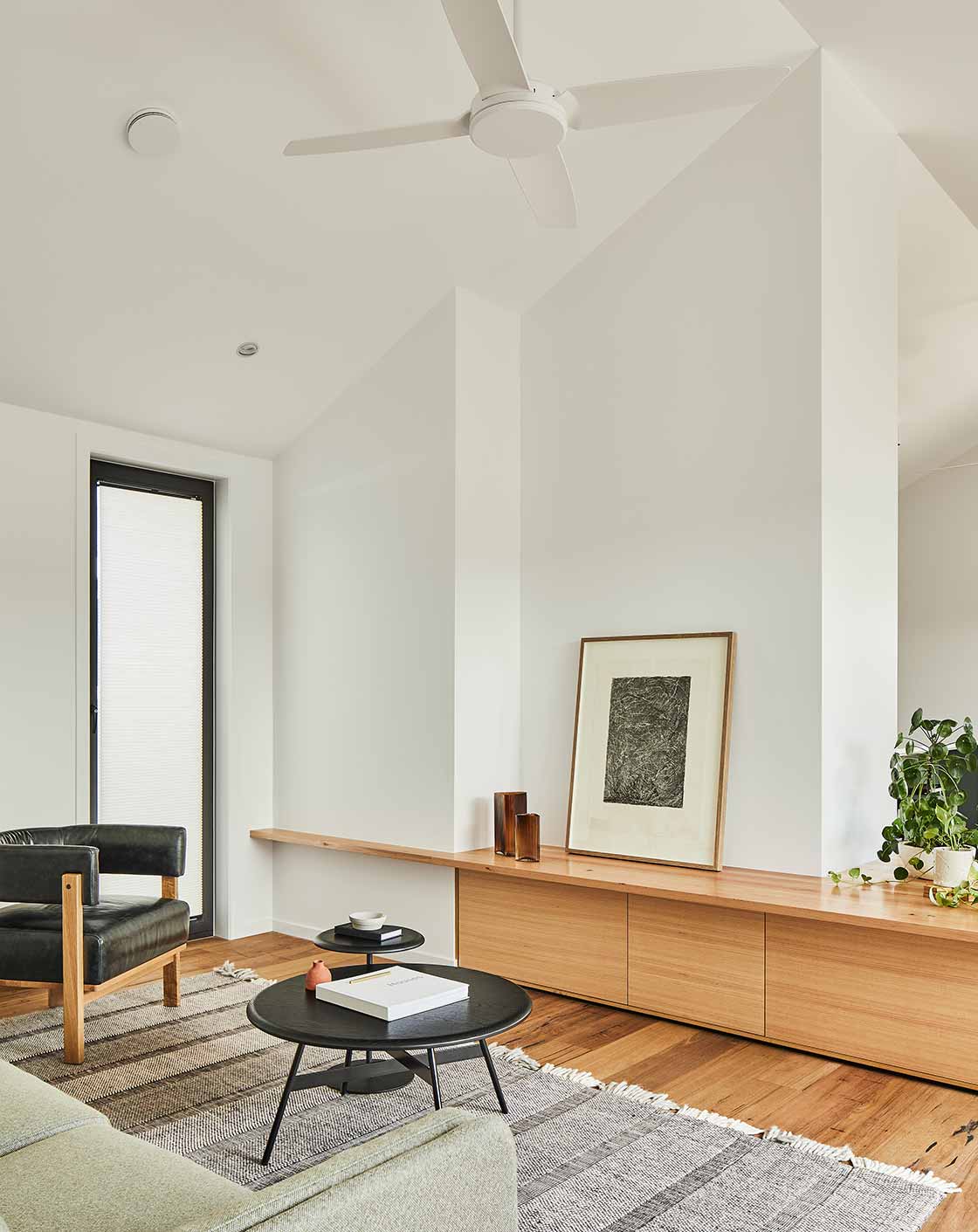
The subdivision into two pavilions is reflected in a thoughtfully- defined interior layout. The timber-clad pavilion houses kitchen, dining and living areas under a vaulted ceiling. The dark weatherboard wing contains bedrooms and bathrooms, creating clear separation between public and private functions.
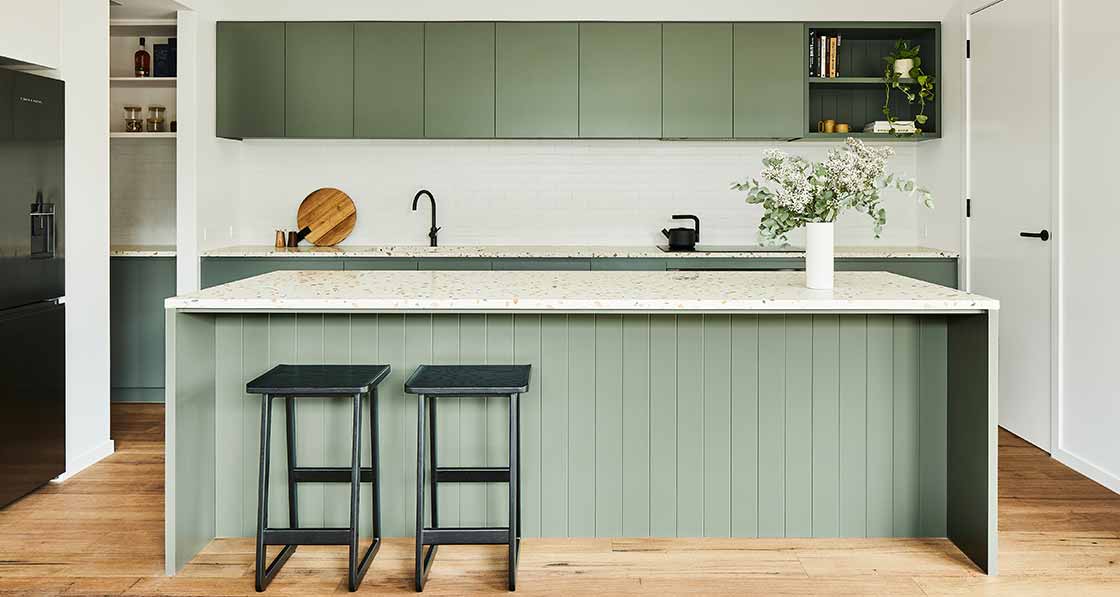
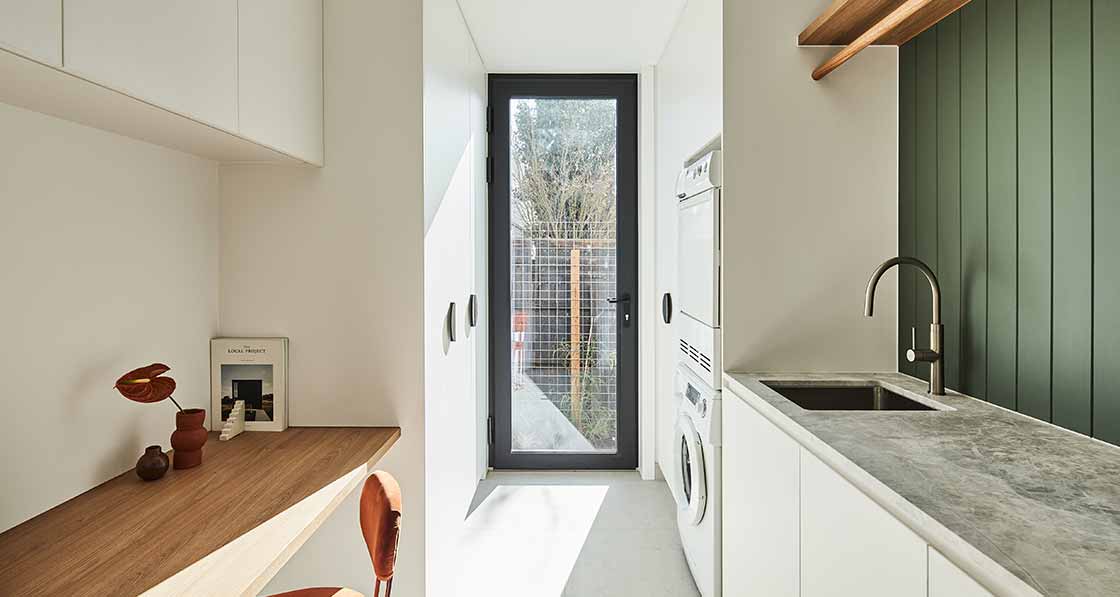
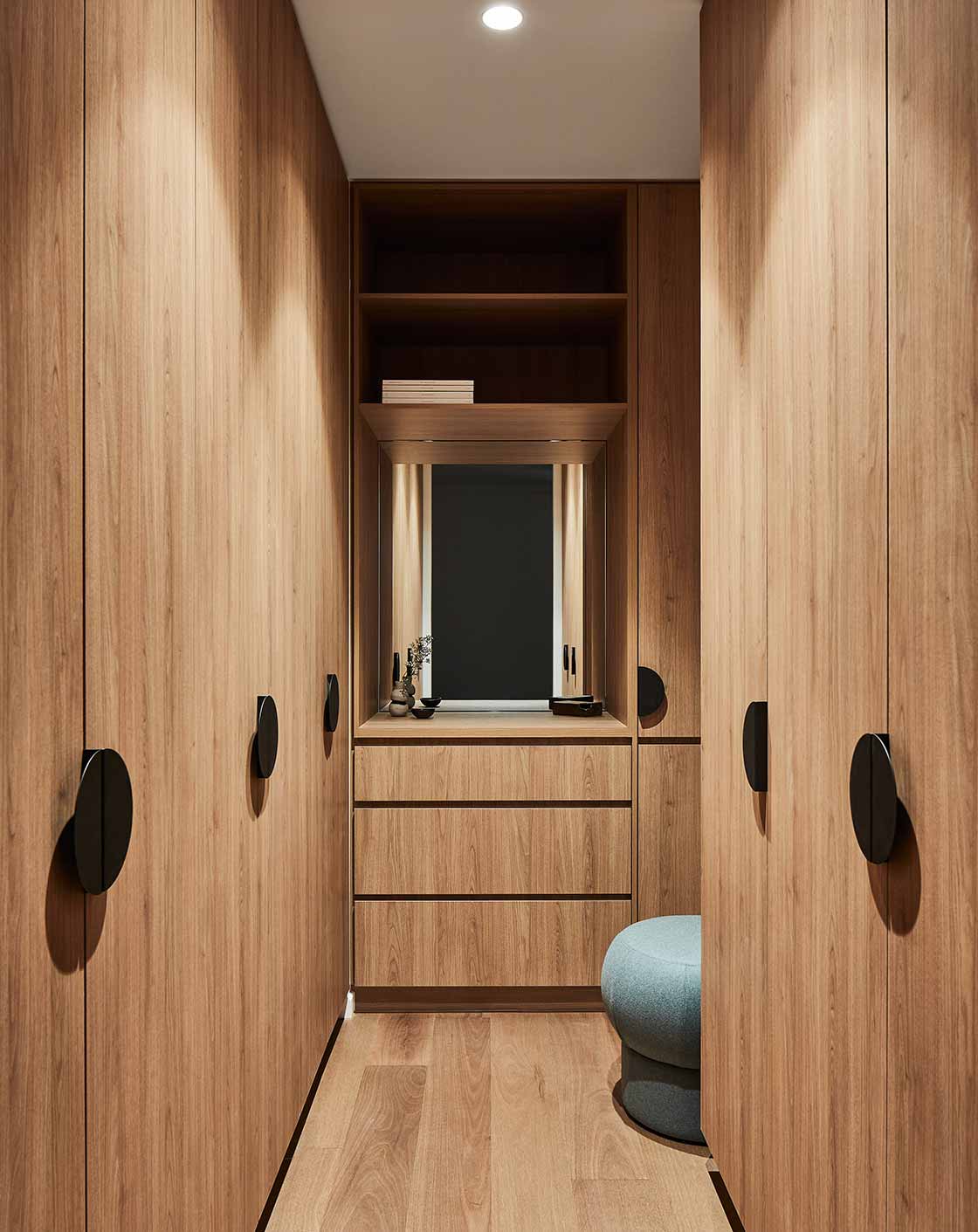
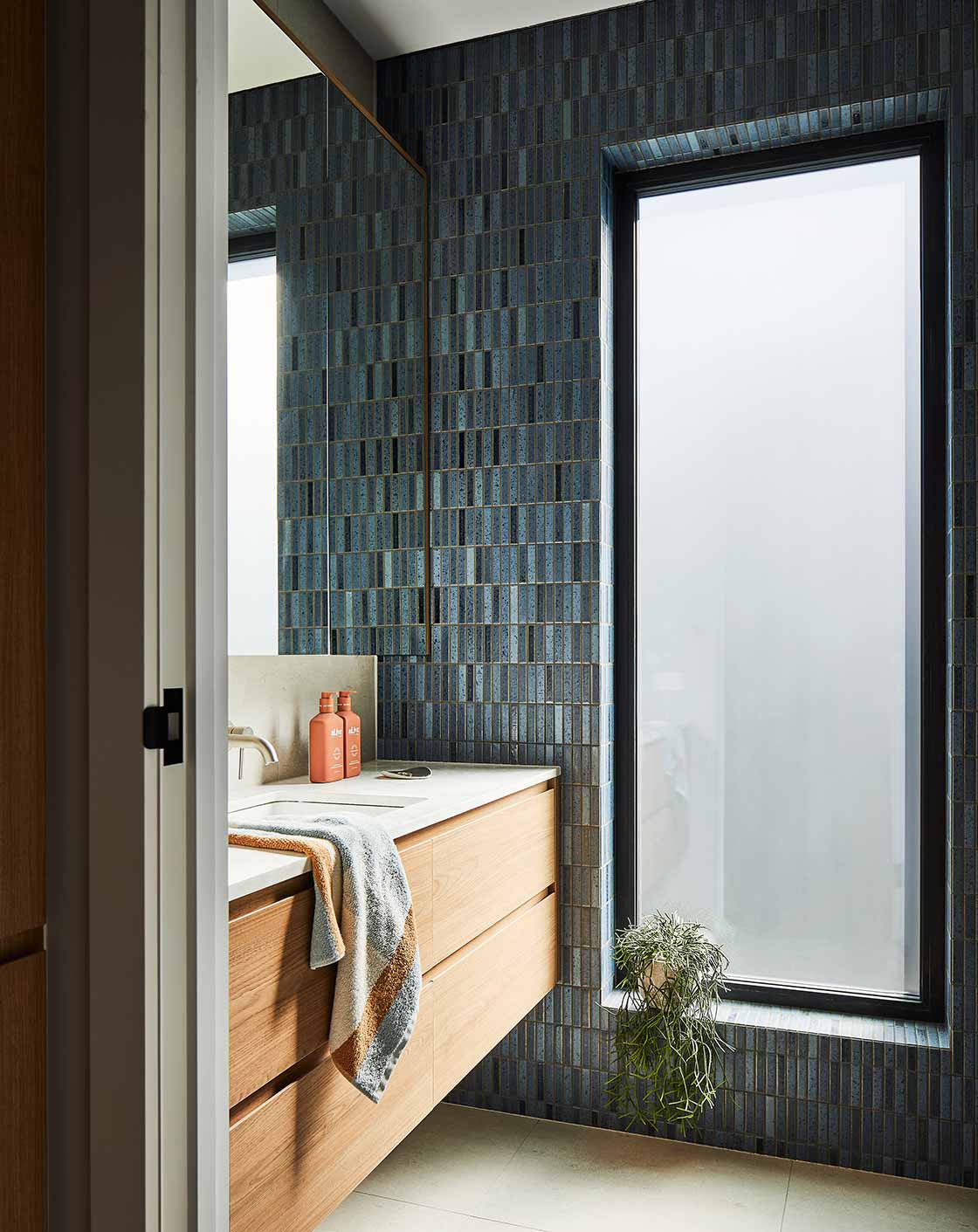
A consistent material palette is intended to create calm throughout.
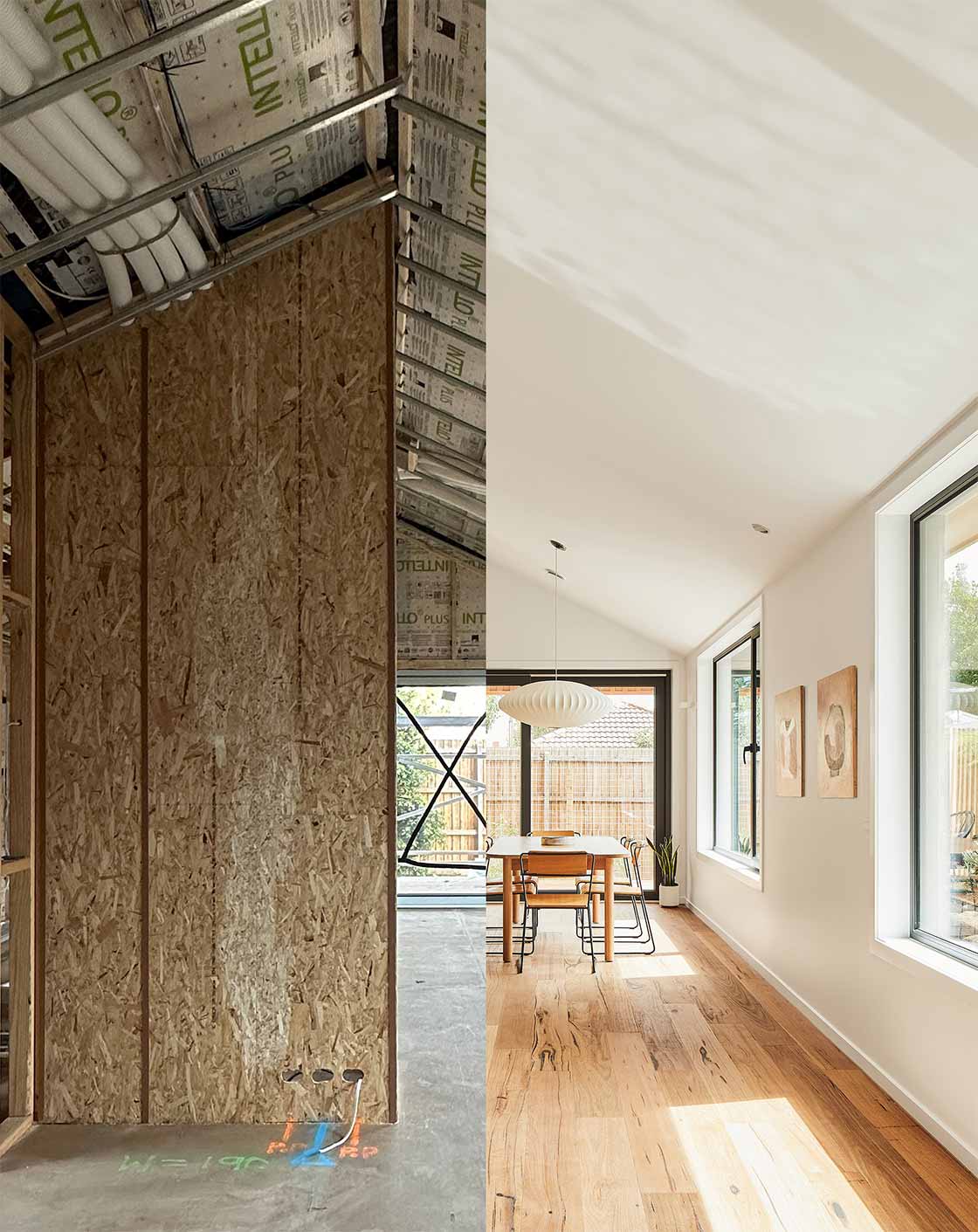
With a passive house, it’s what’s inside that counts. A composite photo shows the airtight layer, with MVHR ductwork housed in a suspended timber ceiling, the hidden best practice which lies beneath the picture-perfect finish.
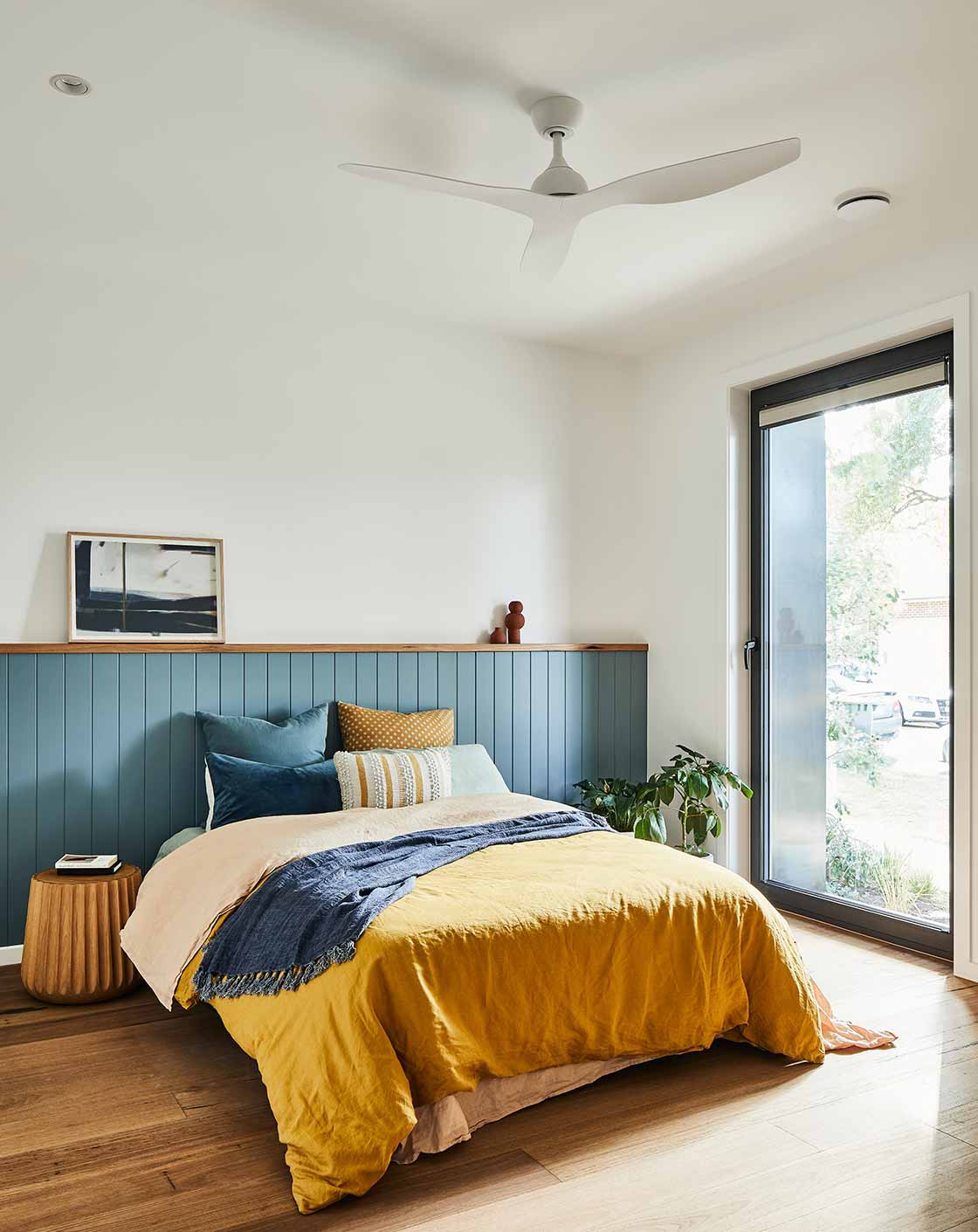
Sage green timber panelling in the main bedroom complements natural oak flooring while glazed doors provide direct access to outdoor spaces – with generously sized windows in the living space too.
"We managed to have these lovely big windows, but we haven't traded off the energy efficiency," Erin said. "I think maybe I did have a perception that passive houses often had little dinky windows, but I feel like I get that big picture window looking out on the garden."
Ceiling fans provide air movement for comfort during warmer months without having to resort to air conditioning. So successful has this strategy been that the 3.5 kW Daikin bulkhead reverse cycle air conditioner hasn’t been turned on for cooling or heating since the family moved in.
From a UK and Ireland perspective, the Melbourne climate offers certain advantages in terms of insulation levels required to meet compliance. While the roof boasts an impressive U-value of 0.125 W/m2K, the glass wool insulated 140 mm timber frame walls plus service void hits a comparatively modest 0.258 W/m2K, with the subfloor – which sits on concrete-free Allfoot steel footings – coming in at 0.2 W/ m2K. Even the triple-glazed windows used have a relatively high U-value of 1.24 W/m2K, and a G-value of 0.57 providing relatively moderate solar control.
A combination of Altereco’s considered design, Carland Construction’s careful workmanship and the familiar excellence of Pro Clima tapes and membranes delivered an impressive airtightness test result of 0.41 air changes per hour at 50 pascals.
The resulting performance metrics are impressive: a calculated space heating demand of just 13.9 kWh per square metre annually and a cooling demand of 7.0 kWh/m2/yr.
The building is also designed to use minimal energy in extreme heat and cold too, with a heat load of 11 W/m2 and a cooling load of 14 W/m2.
What’s more even if the air conditioning isn’t used, the house is designed to remain comfortable, passing the 25C threshold specified in the passive house standard less than 11 per cent of the time without air conditioning, with 0 per cent excessive humidity.
These aren't hypothetical figures. Through multiple summers and winters, the owners say they have never needed to turn on their air conditioner in heating or cooling mode.
Even if climate-induced extreme heat events cause the building to surpass 25C in future, the ceiling fans should help the family feel comfortable without turning on the aircon.
Research by the Architecture for Resilient Communities (ARC) programme on low energy buildings in sub-Saharan Africa indicates that evaporation of sweat on the skin caused by air movement from ceiling fans can keep occupants comfortable at temperatures of up to 32 to 35C.
And what about that indoor air quality that the family set out to protect?
Given the triple air quality threat posed by freeway, factories and fires, indoor air quality is protected in two ways. First of all, the house’s exceptional airtightness prevents polluted air entering via infiltration, with internal threats reduced via low VOC paints and zero VOC hard wax oil floor finishes. Then the Zehnder Q350 mechanical ventilation with heat recovery (MVHR) system takes over, minimising pollutants entering the home, and exhausting polluted air while recovering heat.
The MVHR unit includes high grade filters to reduce inbound pollutants, scrubbing up to 50 per cent of particulates of between 0.3 and 1.0 microns before the air enters the living space, with the family diligently replacing the filters every three months. “You should see what comes out,” Erin says.
As with any passive house, the ventilation strategy isn’t fully mechanical, given the option of opening windows, with the Kommerling tilt and turn windows lending themselves to cross ventilation, outdoor air quality permitting.
Solar panels on the north-facing roof contribute to the building's energy balance. The 25-panel Sunpower Performance 3 BLK array and Fronius invertor generates 12,175 kWh annually – well above the household's 8,300 kWh annual requirement.
In Australia, reduction of emphasis on mains water has long been an environmental imperative. A 3,000- litre rainwater harvesting system does much of the heavy lifting here, connected to garden taps, toilet and washing machine. Outside, a covered timber deck extends usable living area without adding to the conditioned floor space that must meet passive house performance requirements. Vertical battens provide solar shading while maintaining airflow. The landscaping uses drought-tolerant native species appropriate for Melbourne's climate, reducing irrigation requirements while creating privacy and amenity.
Described by its designers as Melbourne's Inner West's first certified passive house, Forrest Passive House suggests that Australian residential projects can achieve international energy performance standards without compromising the lifestyle expectations that drive housing demand. The integration of high-performance building envelope strategies with contemporary spatial planning and material choices demonstrates a pathway for broader adoption of passive house principles in the Australian residential market.