Coillte Teoranta

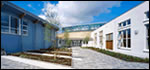
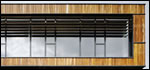
The building is the first all timber office complex in Ireland. It covers almost 2,300m2 of floor space and provides accommodation for almost 100 staff working in a wide range of forestry related disciplines.

The building is the first all timber office complex in Ireland. It covers almost 2,300m2 of floor space and provides accommodation for almost 100 staff working in a wide range of forestry related disciplines.

The rapidly growing public interest in sustainable building is finally starting to impact on property developers. Bill Quigley of Nutech Consultants describes an innovative 200 house development currently on site in Co. Cork where forward-thinking developers J & W Leahy Brothers have decided that the market is ready for low energy, low CO2 buildings.

Chris Croly from BDP outlines the low energy and renewable energy strategies used in University College Cork’s new Environmental Research Institute, a test bed for the design and performance of sustainable buildings, which is ideally suited to housing the 200+ environmental projects carried out by its researchers.

The Daintree Building is a mixed-use, sustainable urban building on Pleasant’s Place, just off Camden St. Dublin , writes Brian O’Brien of Solearth Architects. Conceived in 1999 it has been a long development process—but by late September Daintree should be open for business and the ever innovative Daintree (Paper Co) Ltd will have a new home, one appropriate to the delightfulness of their products and their focus on nature’s generosity for their raw materials.

A new development in the historic town of Thomastown, County Kilkenny brings the cutting edge of green innovation into a setting known for its medieval heritage. John Hearne visited the site, where a commitment to the environment is evident in sustainable design combined with everything from airtight detailing to technologies such as factory insulated timber frame, low energy windows, solar thermal, photovoltaic and heat recovery ventilation

The desire for better insulated, more environmentally friendly homes is driving ever more Irish self-builders to investigate alternatives to traditional block building. Jason Walsh visited a contemporary style factory-built timber frame house built in County Waterford in 2005.

Recently sold by private tender for over e1.3 million, the ECO House in Shankill, Co. Dublin exceeded auctioneers expectations, an indicative example of the shift from public curiosity to eagerness to invest in contemporary sustainable building.

With the building of a new house in Greystones, County Wicklow, Ireland has become only the third country to feature the work of Frank Lloyd Wright. Jason Walsh visited the site to see if Wright's designs might just represent the kind of thinking required in today's energy-conscious buildings.

At Tom Heneghan’s new development in Dromard, Belmullet, Co. Mayo, it’s a case of sixteen units down, eleven to go as Construct Ireland goes to press. Exceeding the thermal performance requirements of the Building Regulations by some 60%, these houses incorporate a range of innovative and affordable sustainable building technologies which together deliver high comfort, low energy living, as John Hearne reveals.

It is hoped that the lessons learned from the construction and monitoring of these buildings will assist in reducing the energy usage of future school designs.