New Build VS Old Build
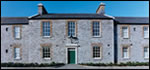
A recent study undertaken by Dublin City Council could serve to shatter many commonly held misconceptions about how existing buildings can perform when compared to new build, even simply just in terms of running costs.

A recent study undertaken by Dublin City Council could serve to shatter many commonly held misconceptions about how existing buildings can perform when compared to new build, even simply just in terms of running costs.

The desire for better insulated, more environmentally friendly homes is driving ever more Irish self-builders to investigate alternatives to traditional block building. Jason Walsh visited a contemporary style factory-built timber frame house built in County Waterford in 2005.
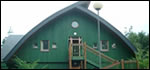
The building is the first all timber office complex in Ireland. It covers almost 2,300m2 of floor space and provides accommodation for almost 100 staff working in a wide range of forestry related disciplines.
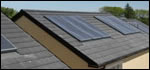
The rapidly growing public interest in sustainable building is finally starting to impact on property developers. Bill Quigley of Nutech Consultants describes an innovative 200 house development currently on site in Co. Cork where forward-thinking developers J & W Leahy Brothers have decided that the market is ready for low energy, low CO2 buildings.
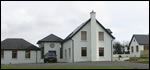
In 2005 Construct Ireland profiled the timber frame extension to Hannah and Martin Naughton’s Meath cottage. Five years later we’re returning to profile the upgrade of the original bungalow — a renovation that demonstrates how to detail dry lining without running the risk of mould growth
A new development in the historic town of Thomastown, County Kilkenny brings the cutting edge of green innovation into a setting known for its medieval heritage. John Hearne visited the site, where a commitment to the environment is evident in sustainable design combined with everything from airtight detailing to technologies such as factory insulated timber frame, low energy windows, solar thermal, photovoltaic and heat recovery ventilation
Ron and Collette Wardle started suffering ill health almost immediately after a sloppy energy upgrade. But reading a copy of Construct Ireland started a chain of events that led to the couple getting a brand new ventilation system — and seeing a marked improvement in their health.
As the new-build sector grinds to a halt a window of opportunity has opened for builders, architects and other construction service providers – refurbishing Ireland’s existing housing stock. Jason Walsh visited an end-terrace house in inner city Dublin to see just how significant the improvements can be.

Jason Walsh visited the Green Building, a pioneering sustainable development built in Dublin's Temple Bar in 1994, to find out how one of Ireland’s most ground breaking eco designs has been performing over the last decade.
Adding to the list of developers aiming to deliver energy efficient housing, Cronan Nagle Construction are currently on site with 188 highly insulated, airtight homes in Ennis, co. Clare. The development, which also incorporates heat recovery ventilation and condensing gas boilers is surpassing the thermal requirements of Building Regulations by up to 45%, as John Hearne discovers.