
person_outline

Lenny Antonelli is deputy editor of Passive House Plus. He also writes regularly for the Irish Times, and has contributed to a variety of other publications including the Sunday Times, the CS Monitor, Village, the Sunday Tribune amd the Dubliner. He is currently working on a radio documentary on Ireland's oceans.
Website URL: http://lennyantonelli.ie/
Friday, 19 February 2010 00:00
Green building & energy links, Feb 19
A bumper bunch of links today:
Video of Bill Gates talking about 'zero carbon' at the TED conference: TED
World's tallest building closed indefintely: Archinect
50 "must read" green engineering blogs: Top Online Engineering Degree
Passivhaus renovation of a Victorian terrace house: TreeHugger
Are the days of the cul de sac over? Treehugger
Looking at lights from space - a sign of progress or failure? Treehugger
Norway to build world's largest wind turbine: Inhabitat
The coming renaissance of electrical contractors: softwareadvice.com
Would you live in a shipping container? Inhabitat
Is the Living Building Challenge the toughest green building standard in the world? Jetson Green
UK boiler scrappage scheme a "success": Energy Savings Trust
Barack Obama's $5bn green home gets off to a slow start: Guardian
Loft insulation - Australia's burning issue: Guardian
...and lastly, officials in Tysons Corner, Virigina are thinking of letting developers build at higher densities if their buildings are greener - a concept known as 'planning gain', and something I wrote about in my first ever article for Construct Ireland. See Green Building Law Update for more.
Published in
Blogs
Tagged under
Thursday, 18 February 2010 11:37
BER assessors association to host AGM in Dublin
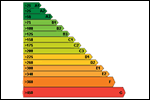
The BER Assessors Association of Ireland will hold its AGM and a series of workshops tomorrow, Friday February 19, in the Red Cow Moran Hotel, Dublin.
The workshops are open to members and non-members of the association. Information stands will be hosted by FÁS, Flo Gas, Kingspan Insulation, Kingspan Solar, OWL, Ecological Building Systems, and Construct Ireland.
Published in
Events
Wednesday, 17 February 2010 00:00
A new wood fuel quality mark for Ireland
A press release on the SEI website has announced the launch of a new quality mark for wood fuels in Ireland. With a deadline approaching I don't really have time to dissect the details right now, but the programme - known as the Wood Fuel Quality Assurance scheme - will be launched in Tipperary tomorrow.
Various agencies appear to have played a role in drawing up the scheme, including Coford, NSAI, SEI, the Irish Bioenergy Association and Waterford IT.
The press release says the "quality assurance scheme will certify organisations involved in the manufacture / supply of quality logs, chips, pellets and briquettes formed from clean wood. This QA scheme will provide customers with confidence that they are purchasing a quality wood fuel from a sustainable source relevant to their needs."
Unfortunately the press release doesn't appear to list the specific criteria wood fuels will have to meet to get the stamp, nor does the Irish Bioenergy Association website. However the Wood Fuel Quality Assurance scheme website will go live tomorrow, so more details should be available then.
Various agencies appear to have played a role in drawing up the scheme, including Coford, NSAI, SEI, the Irish Bioenergy Association and Waterford IT.
The press release says the "quality assurance scheme will certify organisations involved in the manufacture / supply of quality logs, chips, pellets and briquettes formed from clean wood. This QA scheme will provide customers with confidence that they are purchasing a quality wood fuel from a sustainable source relevant to their needs."
Unfortunately the press release doesn't appear to list the specific criteria wood fuels will have to meet to get the stamp, nor does the Irish Bioenergy Association website. However the Wood Fuel Quality Assurance scheme website will go live tomorrow, so more details should be available then.
Published in
Blogs
Tagged under
Friday, 12 February 2010 00:00
Gary Neville's "zero carbon" house
For those of you who haven't already seen pictures of it floating about, I thought I'd post a pic of the design for Manchester United captain Gary Neville's new house, designed by Make Architects. According to Inhabitat, the house will feature locally-sourced materials, a ground source heat pump and PV panels, and is designed to be "zero carbon". The architects say it was inspired by the neolithic settlement of Skara Brae in Orkney, and not the Tellytubby House.

Published in
Blogs
Tagged under
Wednesday, 10 February 2010 00:00
Green building & energy links, Feb 10
As usual, a few links:
Out of the ruins, a more sustainable Haiti: Treehugger
Why are so many Paul Rudolph buildings being torn down? Treehugger
Car bodies could store energy like batteries: Inhabitat
Top five green gadgets to look for in 2010: mylifescoop.com
Can solar panel mounts cause roof leaks?: GreenBuildingAdvisor.com
World's first personal carbon credit: Guardian
£60m eco-home funding announced in the UK: Energy Savings Trust
Published in
Blogs
Tagged under
Monday, 08 February 2010 13:34
Are you being served?
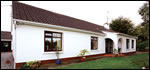
A sustainable energy project in north Tipperary has the potential to create a pioneering green community – buildings are getting energy makeovers, grants are available for renewables and the ecovillage at Cloughjordan is under construction. But getting householders in the area to go green is still proving a hard sell, as Lenny Antonelli reports
Published in
Policy
Monday, 08 February 2010 13:03
Hempcrete retreat
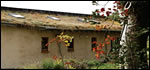
No matter how energy efficient a building method is, constructing a house from scratch will always cause some damage to the environment - but what if a building material could absorb more carbon than it causes to be released over its life cycle? Lenny Antonelli visits a hempcrete house in Co. Down that seeks to trial this innovative method of building
Published in
Design Approaches
Tagged under
Monday, 08 February 2010 12:53
Gimme shelter
Designing a low energy building when you've got unlimited space is one thing – but what if you need to make your walls thin to maximise space on a small site in an architectural conservation area? Lenny Antonelli visited a new St Vincent De Paul sheltered housing project that fit a lot of sustainable features on to a small plot in Dublin's north inner city.
Published in
Social Housing
Monday, 08 February 2010 12:44
Intlernational green buildings III
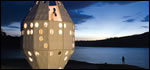
In the third installment of a new feature on international green buildings, Lenny Antonelli takes a look at more innovative, sustainable and striking buildings from around the world.
Published in
Case Studies
Friday, 05 February 2010 00:00
Just exactly how good is aerogel?
I've come across mentions of aerogel insulation a few times recently - it featured in a few of the buildings from the Solar Decathlon that I wrote about in the current issue of Construct Ireland. The claims made about it are generally impressive: that it's an ultra-light, extremely high performance translucent insulator that was, apparently, developed by Nasa. But I have no real way to verify these claims, so I'm curious to hear what readers know about it. I've certainly yet to see it used in a project in Ireland.
A new article on Jetson Green certainly speaks fondly of the stuff:
Despite the fact that we are now living in the 21st century, aerogel insulation seems like a material out of science-fiction. It is the lightest solid known, although by volume it is 99% air. It is breathable, but it doesn't absorb water. It is incredibly strong for its weight. But most importantly, it is a fantastic insulator.
There's also an interesting discussion about it on greenbuildingforum.co.uk.
Anyone know any more?
Published in
Blogs
Tagged under
Page 32 of 47