
Kill bills - End-of-terrace all but ends energy costs
Sometimes a project comes along that redefines
what’s possible in a retrofit. One Dublin family
went from camping indoors to constant comfort
and almost zero energy costs.


Decarbonising homes at scale demands pragmatic sequencing, not doctrinal purity. Lloyd Alter reconsiders the retrofit strategy he once vigorously opposed – while mounting a defence of deep fabric retrofit, with caveats.

The Irish government has announced a range of new retrofit grant measures targeted at households exposed to high energy costs – and increased grants for switching to heat pumps.
The new grants will be available from 6 October, contrary to media reports that they would apply from January.

How can period properties be made fit for the demands of the 21st century, without pushing the building too far? One University of Cambridge retrofit project may have the answer, harnessing multidisciplinary expertise to balance energy, moisture and space constraints.
Additional reporting by Jeff Colley.

Ireland must treat building decarbonisation as critical national infrastructure to protect households from future energy price shocks, according to a new policy scorecard launched recently.

One of the largest non-domestic passive house retrofits yet attempted in the UK, the £100 million Firoz Lalji Global Hub for the London School of Economics (LSE), will be the subject of a dedicated technical masterclass when the UK Passivhaus Conference returns to London this November for the first time in more than a decade.

An award-winning retrofit demonstrates that universal design and ultra-low energy performance are powerful allies, not competing priorities.
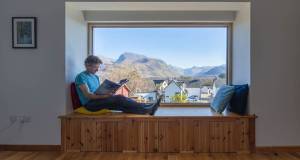
From frozen tea to thermal bliss: energy specialist Esmond Tresidder transformed his leaky 1970s Highland home into one of the highest performing retrofits ever featured in these pages, combining academic knowledge with hands-on retrofit innovation to create a comfortable, healthy family haven with breathtaking views of Ben Nevis, proving that even Scotland’s most challenging climates are no match for passive house principles.

Through passion, patience, and architectural expertise, a 16th century Carmel-ite friar’s cottage in Kinsale, owned by Passive House Plus columnist Dr Marc Ó Riain, has achieved what many thought impossible— an A1 energy rating for a Tudor-era building. But not without challenges.
The upgrade of Ireland's retrofit target to A3 marks a critical step forward, bridging the gap between energy modelling and real-world performance, explains Dr. Marc Ó Riain.
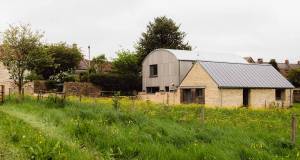
The Sustainable Energy Authority of Ireland has launched a home energy upgrade for traditional homes pilot.

KORE Retrofit, a leading provider of sustainable retrofit solutions in Ireland, is pleased to announce the appointment of Dr Barry Mc Carron as its new managing director. Mc Carron brings extensive experience in sustainable development, building energy performance, and project management to this pivotal role.
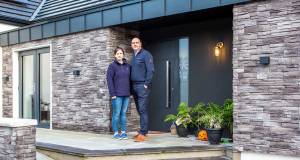
What does it feel like to suffer the cold, mould and discomfort of a 1960s bungalow, and experience its rebirth as a passive house? The owner of one award-winning project spills the beans.
Additional reporting by Jeff Colley
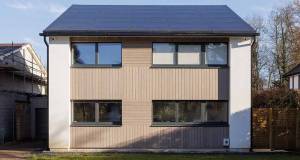
A passive house, by its nature, requires a much smaller amount of energy than a typical home, and when its heating demand is met by electricity, and you cover it in solar PV panels, you can start to see the potential for a whole new generation of passive homes that are semi-independent of the electricity grid. This is the case for Carrstone House in Bedfordshire, which generates so much solar energy it had to be registered as a power station.

How flexible can heat pumps be to handle what may be inexactly defined heating demands, asks Toby Cambray?
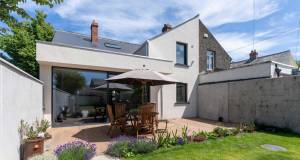
The skilful deep retrofit of a red-brick semi on the south side of Dublin has brought an old property into the 21st century in terms of energy performance and living space, while carefully upgrading its century-old façade with breathable materials.
The Association for Environment Conscious Building (AECB) has introduced a new retrofit standard catering for hard-to-treat homes and cases where homeowners want to take urgent action on climate change but are not currently able to commit to a deep retrofit.
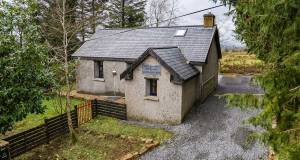
Rural Ireland has a crisis of dereliction, with numerous government policies aimed at breathing new life into thousands of old, vacant buildings. The careful transformation of one 19th century schoolhouse into a small, beautiful home shows a way forward for the sensitive, climate-conscious renovation of many of these properties.

There has been a sleuth of recent reports on how to retrofit Britain’s existing homes, but we must think deeper than the practical matter of reducing energy and carbon, to how we create beautiful places to live, writes Peter Rickaby.

Some one-stop-shops will not take on projects with new build extensions.