
person_outline

Freelance journalist John Hearne has contributed a diverse range of news and feature material to a range of Irish newspapers and magazines. Currently, he is a regular contributor to The Irish Examiner and The Irish Independent, where he writes on tourism, consumer affairs, business and careers.
Wednesday, 12 November 2008 17:02
Measured efforts
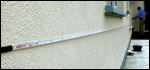
Earlier this year constructireland.ie broke the news of the introduction of the pilot Home Energy Saving Scheme, a new grant funding programme designed to stimulate the en masse refurbishment of Ireland’s poorly performing existing housing stock. John Hearne travelled to one of the pilot areas to see how the scheme is working on the ground, and discover how the scheme is developing.
Published in
Renewable Energy
Wednesday, 12 November 2008 16:30
Central line

Developers across Ireland are beginning to see the sense in shifting from individual heating systems to centralised energy production feeding into district heating networks. John Hearne visited a mixed-use scheme in Ballisodare, County Sligo, where a cutting edge biomass energy centre is providing a multitude of different buildings with energy from a green, secure source.
Published in
District Heating
Tagged under
Monday, 14 July 2008 16:08
Force of Habit
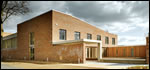
Two years ago Construct Ireland ran a case study on Mater Orchard, a Mercy Sisters convent building that successfully balanced cutting edge technologies with pragmatic green design. Such was the success of that building, its architects were commissioned by Mercy Sisters in Limerick to repeat the feat. John Hearne visited the freshly completed building to find out how they fared
Published in
Design Approaches
Wednesday, 21 May 2008 23:48
High & mighty
An advocate of sustainable building long before it was fashionable, Bill Quigley of NuTech Renewables has subsequently seen the mainstreaming of sustainability at first hand, having input into substantial projects for Leahy Bros, MKN and GEDA Construction amongst others. In their latest project, NuTech are working with Wicklow County Council on a social housing scheme with impressively high energy performance targets to meet, as Quigley explains.
Published in
Social Housing
Wednesday, 21 May 2008 23:46
Venting opinions
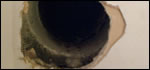
Whilst great strides are being made in upgrading energy performance requirements under Part L of the Building Regulations, the issue of ventilation has remained largely ignored by legislators for years, leaving designers with antiquated standards to work to. At its worst, efforts to air-tighten and increase the insulation of homes is being undermined by the absurd practice of knocking holes in walls. John Hearne looks into what changes need to be made to modernise Part F.
Published in
Part L - Building Regulations
Wednesday, 21 May 2008 23:37
Environmental Authority
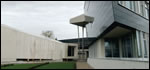
As long term readers of Construct Ireland will recall, the mainstreaming in recent years of sustainable design and construction has been exemplified in many innovative local authority offices. John Hearne visited Aras Contae an Chláir, and discovered a building which attempts to holistically minimise environmental impact, with attention paid to more than just energy performance and carbon emissions.
Published in
Sustainable Building Technology
Monday, 21 January 2008 14:31
Winning Combination
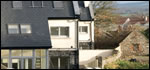
A new development in the historic town of Thomastown, County Kilkenny brings the cutting edge of green innovation into a setting known for its medieval heritage. John Hearne visited the site, where a commitment to the environment is evident in sustainable design combined with everything from airtight detailing to technologies such as factory insulated timber frame, low energy windows, solar thermal, photovoltaic and heat recovery ventilation
Published in
Case Studies
Monday, 21 January 2008 14:01
Municipal Bond
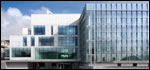
If the Irish construction industry is truly to rapidly embrace the concept of sustainability, leadership from the public sector will be paramount in setting the right example. John Hearne spoke to the design team of the Opus and RIBA award-winning Cork Civic Offices, a development which keeps carbon emissions and fossil energy consumption to a minimum, and once more puts the public sector at the forefront of innovative sustainable design
Published in
Design Approaches
Monday, 07 January 2008 16:00
A Breath of Fresh Air
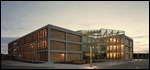
Prestige commercial buildings can place a heavy toll on the environment, typically relying in Ireland on carbon intensive grid electricity to power air conditioning systems throughout the warmer parts of the year and inefficient electric lighting – often all year around. Completed in November 2004, software company SAP’s Galway offices offer a rare opportunity to find out how a natural ventilated and low energy lighting building is working in practice, as John Hearne reveals.
Published in
Design Approaches
Monday, 07 January 2008 15:33
Renewed efforts
In the future, the high cost and scarcity of fossil energy may force a shift towards retaining and modernising old buildings, thereby avoiding the use of huge amounts of energy to manufacture building materials. John Hearne visited the Belvedere Orphanage, a group of 19th century dwellings whose low energy refurbishment may offer a template for development in the future, by using wood pellet district heating and a host of energy saving measures whilst nonetheless paying great attention to preserving the buildings’ heritage value.
Published in
Sustainable Building Technology
Page 9 of 11